
Quran Verses & Interpretation
Understanding Quran Verses: How to Read, Reflect and Apply
A practical approach to understanding the meaning of Quran verses (tafsir), reflecting on a daily ayah, and applying its guidance to everyday life.
6 min read
In short
To understand a Quran verse, read the translation first, then look at where it sits in the surah, why it was revealed, and what a short tafsir says about it. One ayah read slowly with its meaning teaches you more than a full page you don't understand.
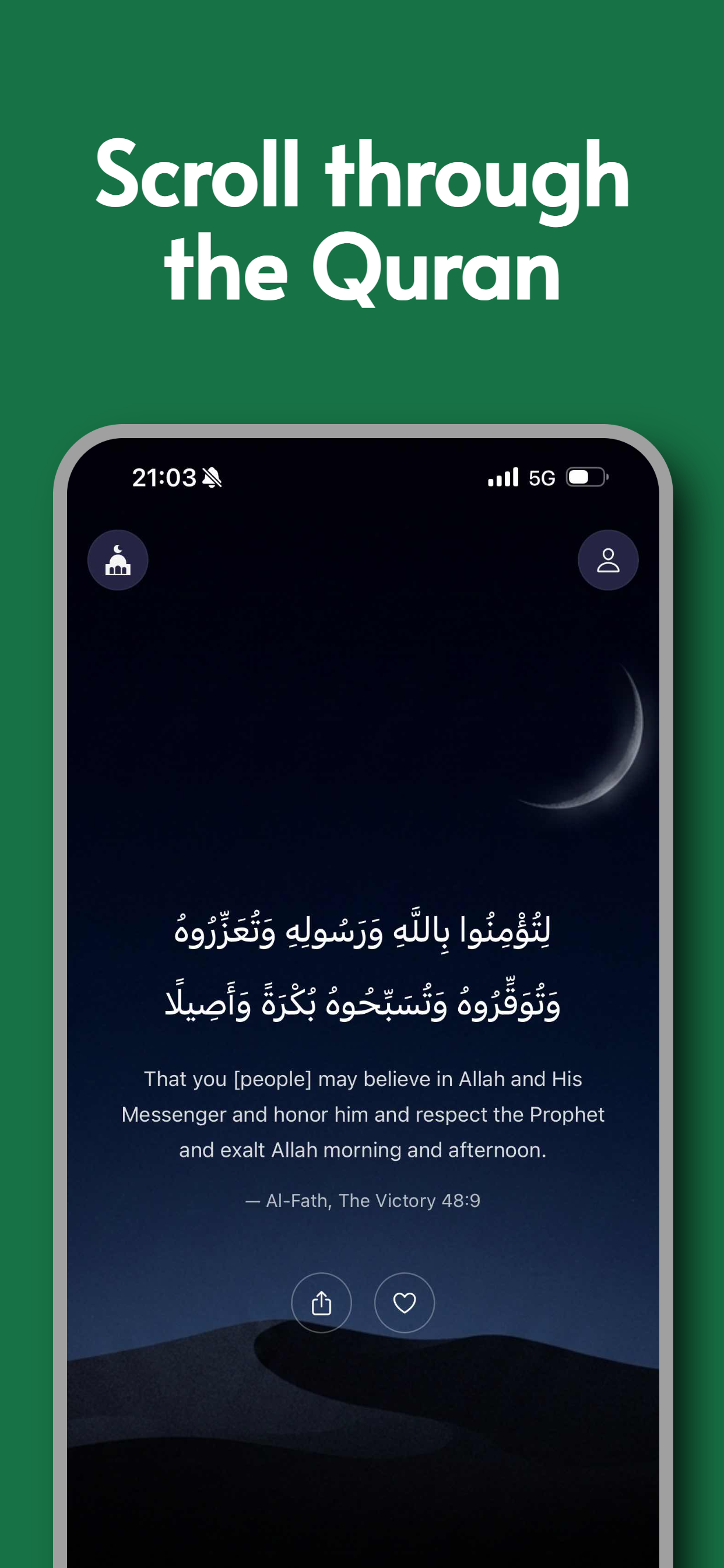
Reading is only the beginning
The Quran was revealed to be understood and acted upon, not merely recited. While recitation carries reward, real transformation comes from reflecting on the meaning of the verses — a practice the Quran itself calls tadabbur.
You do not need to be a scholar to begin. Start with short, well-known chapters and a reliable translation in your own language alongside the Arabic.
أَفَلَا يَتَدَبَّرُونَ الْقُرْآنَ أَمْ عَلَىٰ قُلُوبٍ أَقْفَالُهَا
“Then do they not reflect upon the Qur'an, or are there locks upon their hearts?”
What is tafsir?
Tafsir is the scholarly interpretation of the Quran that explains the context, language and intended meaning of each verse. It draws on the Prophet's explanations, the understanding of his companions, and the Arabic language.
When a verse feels unclear, a short tafsir note prevents misunderstanding and reveals depth that a plain translation can miss — such as the reason a verse was revealed (asbab al-nuzul).
A simple daily method
Read one ayah slowly. Read its translation. Read a brief tafsir note. Then pause and ask three questions: What is Allah telling me? What does this ask of me? What one action can I take today because of it?
This turns reading into reflection, and reflection into practice. A single verse understood deeply is worth more than pages read in a hurry.
وَلَقَدْ يَسَّرْنَا الْقُرْآنَ لِلذِّكْرِ فَهَلْ مِن مُّدَّكِرٍ
“And We have certainly made the Qur'an easy to remember, so is there any who will be reminded?”
Make it a daily habit
Consistency is what builds understanding over time. Tariq surfaces a daily ayah with its translation and a reflection prompt so you can build the habit of tadabbur without deciding where to start each day.